Showing posts with label al-Qaeda. Show all posts

Friday, July 27, 2007

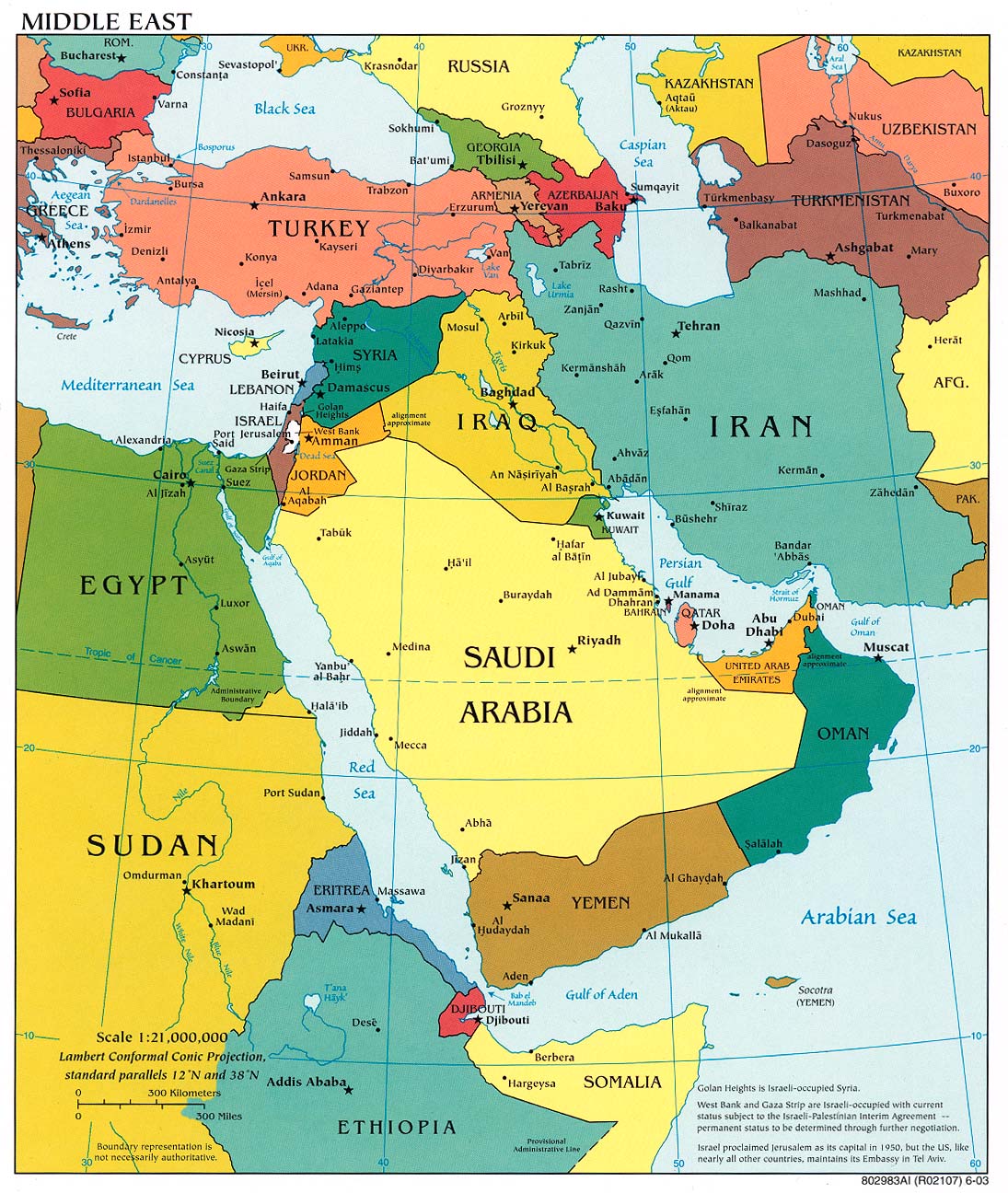
The Arab League in Israel?

"Wednesday's visit was the first by Arab League representatives to promote their peace plan," remarked an article in al-Jazeera.

The author was referring to a trip by the Egyptian and Jordanian foreign ministers to the Jewish State, where they met with the Israeli Prime Minister, foreign and defense ministers, and president. The purpose of the trip was to promote the Arab League's Saudi Peace Initiative for a resolution of the Arab-Israeli conflict.

Mark Regev, Israel's foreign ministry spokesman, agreed with al-Jazeera over the nature of the visit: “This is the first time that a delegation is coming here under the auspices of the Arab League.’’

But Amr Moussa, the Secretary General of the Arab League, vigorously denied that the foreign ministers represented his organization: "They are not acting under the banner of the Arab League. They represent two Arab countries that for certain circumstances entered into peace accords and official diplomatic relations."

So what's the fuss about? Why would Moussa offer such a fervent repudiation of any connection between the ministers' mission and the Arab League?

The answer, it seems to me, is that old animosities die hard. Though the League was created in 1945, in 1944 representatives from Egypt, Syria, Jordan, Iraq, and Lebanon gathered to discuss the future institution. The result was the Alexandria Protocol, which spelled out the goals of the Arab League.

One of those goals was to end Jewish immigration into what was then British Mandate Palestine. Later, shortly after the Arab League was finalized, the League passed a resolution that stated, "Jewish products and manufactured goods shall be considered undesirable to the Arab countries" and that all Arab "institutions, organizations, merchants, commission agents and individuals" must "refuse to deal in, distribute, or consume Zionist products or manufactured goods."

Since then--when the leaders of Arab League member states weren't calling for the Jews to be thrown in the sea, or denouncing Israel at the U.N., or supporting groups that kill Israeli civilians--the League has tried to ignore Israel. Pretend it doesn't exist, that it is not part of the region.

But lately there have been forces in the Middle East that can't be ignored: the rise of both al-Qaeda and Iran. Though Saudi Arabia once thought it could contain al-Qaeda, the terrorist organization has perpetrated attacks throughout the Middle East, including within Saudi territory. And Iran--whose Persian, Shi'ite version of Islam is an anathema to most Arab countries--has grown increasingly bellicose.

In order to counter these forces, and ease internal tensions, Saudi Arabia came up with a plan that was approved by the Arab League in 2002 and reaffirmed in 2006. The Saudi Peace Initiative calls for full Arab recognition of Israel in return for 1) Israeli withdrawal from the West Bank, the Gaza Strip, and east Jerusalem; 2) the creation of a Palestinian State; and 3) a just solution to the Palestinian refugee problem in accordance with U.N. Resolution 194 (which the Arab public takes to mean that Palestinians should be allowed to resettle in Israel).

The Arab League expects Israel to carry out its obligations before gaining diplomatic recognition from the Arab states. So even though the League has certified the Initiative and authorized the Jordanian and Egyptian foreign ministers to speak to Israel in order to promote it, the Arab League bristles at any suggestion that it is dealing with the "Zionist regime."

If it truly envisions peace between Israel and its neighbors, the Arab League must end these petty denials. This way, Israel and the international community will know that the League desires a friendly, safe, and prosperous future more than it dwells on past hostilities.

Read More......

Monday, July 9, 2007

Al-Qaeda Issues Ultimatum to Iran

According to an article in al-Jazeera, al-Qaeda in Iraq threatened to wage war against Iran if the country continued to support Iraq's Shi'a community.

Abu Omar al-Baghdadi, the leader of the Islamic State in Iraq (which is affiliated with al-Qaeda in Iraq) stated in an audio tape:

We are giving the Persians, and especially the rulers of Iran, a two-month period to end all kinds of support for the Iraqi Shia government and to stop direct and indirect intervention ... otherwise a severe war is waiting for you.
He further warned Arab countries from doing business with Iran.

The audio tape has not been independently verified. Moreover, the U.S. military previously stated that they killed al-Baghdadi in May. But a scenario of al-Qaeda attacking Iran is by no means far-fetched.

Most historians, at least in the U.S., credit the 1979-1989 Soviet invasion of Afghanistan for leading to the creation of al-Qaeda. They claim that Muslims were called to jihad against the "atheist invader," and the U.S. supported these fighters with money and arms.

This may be part of the story of how al-Qaeda was created, but it is not the complete story. The year 1979 also saw the creation of the Islamic Republic of Iran. According to Vali Nasr in his book "The Shia Revival," this event was one of the principal steps in the spread of al-Qaeda ideology. But not in the way most Americans might think.

Iran is a predominantly Shi'ite country. They have beliefs that conflict with Sunni interpretations of Islam. For example, they believe that the successors to their Prophet Muhammed should have been members of Muhammed's family, rather than learned individuals chosen by a group of scholars (as was the case). The Shi'a also believe that one day the Twelfth Imam, a descendant of Muhammed and a messiah-like figure, will bring about the end of times. Most Sunnis do not believe in the Twelfth Imam. In addition, the Shi'a build shrines to revered figures in their history, whereas many Sunnis consider such acts a form of idolatry.

Grand Ayatollah Khomeini, the leader of the new Islamic Republic of Iran, promised to spread the ideology and influence of Shi'a Islam. He succeeded in many places including Iraq, countries around the Persian Gulf, and Lebanon (where his crowning success was the development of Hezbollah).

In response, Saudi Arabia greatly increased it funding for madrasahs, or schools. These institutions promoted Wahabism, an extreme form of Islam that has no tolerance for anyone perceived to defame Sunni traditions. Shi'ites from the beginning were a target of Wahabi wrath.

To counter the rise of Iran and its proxies, Saudi Arabia fully supported the spread of Wahabi militarism. And Wahabi ideology forms the backbone of al-Qaeda.

Since the U.S. intervention, many in the Shi'a community in Iraq, led by individuals such as Muqtada al-Sadr and backed by Iran, have fought against Sunni groups including al-Qaeda in Iraq. Iran has further supported the Iraqi government, which some view as anti-Sunni. So it would not be surprising if in the near future we see al-Qaeda declare an all out war against Iran.


Read More......

Thursday, July 5, 2007

Hamas and the Army of Islam

Alan Johnston, the BBC reporter captured by a little known terrorist group called the "Army of Islam" four months ago, was finally freed yesterday. Upon his release, Johnston stated that his captors were "just cruising along" under the Fatah security regime, but there was a palpable fear once Hamas' Gaza military coup. Johnston said, "If Hamas didn't come in and put the heat on, I'm pretty sure I'd still be there."

Here is a summary of the events leading up to his release:

On June 15th, after Hamas conquered the Gaza Strip, its leaders announced that one of its priorities was the release of Johnston.

On June 24th, the Army of Islam (Jaish al-Islam in Arabic) released the following video of Alan Johnston, which shows him in a suicide vest. Johnston pleads for his life, and warns that if Hamas or any other entity attempted to free him by force, the Army of Islam would detonate him.


On July 2nd, Hamas seized several members of the Army of Islam including Khattab al-Maqdisi, the spokesman of the group. Hamas accused al-Maqdisi of opening fire on Hamas security forces.

On July 3rd, hundreds of Hamas gunmen gathered around the area where Johnston was held. Hamas snipers took positions on nearby rooftops and placed vehicles in the road to block off exits.

Early on July 4th, Hamas and the Army of Islam struck a deal and Johnston was released.

The details of the bargain to free Johnston are not clear, but one thing is for certain: the Army of Islam will not be immediately disarmed. A Hamas spokesman stated that the group may keep its weapons if it uses them "to be part of the resistance." In the parlance of Hamas,
that means attacking Israel.

But the main reason that Hamas cited the release of Johnston as a top priority was to gain international legitimacy. As I stated in a previous post, the release of Johnston was one of the steps Hamas must take in order to achieve legitimacy. But it must also maintain order. The Army of Islam is an al-Qaida inspired criminal organization lead by a powerful Gaza clan that has frequently clashed with Hamas, Fatah, and others. Hamas will not be able to preserve the peace if the Army of Islam is allowed to retain arms.

Furthermore, the mere suggestion of a tolerance for al-Qaida will drive off any international good will that Hamas received from securing the release of Johnston. When the Army of Islam kidnapped the BBC reporter, the group demanded that Britain exchange him for detained terror suspect Abu Qatada al-Filistini. The British accuse al-Filistini of mentoring 9/11 co-conspirator Zacarias Moussaoui as well as attempted "shoe-bomber" Richard Reid. In addition, sermons from al-Filistini were found among the possessions of 9/11 hijacker Mohammed Atta.

But even if the Army of Islam had no connections to al-Qaida and only aimed its weapons at Israel, Israel's responses to terrorist attacks would disrupt Hamas' attempts to establish order. Just as Islamic Jihad's incessant rocket fire into Israeli towns will prevent the residents of Gaza from living in peace, so will Israeli Defense Force reactions to attacks from the Army of Islam.

Hamas is making a deadly mistake in allowing the Army of Islam to retain its arms. Such a decision can only lead to further instability in--and international isolation of--the Gaza Strip.

Update 4/28/09
I am now an attorney at Richard J. Mockler, P.A. Visit us on the web at http://www.FamilyLawRights.com

Read More......

Monday, June 25, 2007

Journalists- Accessories to War Crimes?

For quite some time, certain media outlets have formed an understanding with perpetrators of horrific acts of violence. For example, about a year after 9/11, al-Jazeera received a tape from Osama bin Laden which praised the murder of thousands of innocents, and yet the Qatar-based network did not disclose where it received the tape. Such disclosure could have lead to actionable intelligence, and to the possible capture of the head of al-Qaeida. Yet al-Jazeera hid under the cloak of "protecting its sources."

So could it be possible that a reporter for an American news outlet would similarly protect evil in order to "get the scoop?" The answer, apparently, is yes. Aparisim "Bobby" Ghosh, a reporter for TIME Magazine, writes in an article that insurgents have told him how they have developed new tactics for countering the U.S. surge. Ghosh explains that:

At least one Sunni group has adapted its "martyrdom operations" to eliminate the risk to its own fighters. The Al-Qaeda-linked Ayesha Brigade plants bombs in cars owned by Shi'ites and, when the unwitting owners drive them into a crowded area, detonate them by remote control.

Ghosh then goes on to say:


The videotape of one such operation,bearing the date stamp March 26, was showed to TIME by an insurgent who said he had participated in at least six such operations. (We were not allowed to make a copy since the video had not been edited and the faces of several of the Ayesha Brigade fighters were clearly visible.)
Ghosh also talks about two other insurgent commanders that he spoke with for the article. He has obviously earned their trust. And the only way he could have earned that trust is by not "squealing" on the insurgents. Does TIME, or any other news organization, find it morally acceptable to have the confidence of terrorists and war criminals?

Killing an innocent Iraqi for political purposes is clearly an act of terrorism, and using that innocent Iraqi in a war zone to kill others is clearly a war crime. When TIME protects the identities of the perpetrators of such acts, it has the dubious distinction of becoming an accessory to evil.

Read More......