Showing posts with label Democracy. Show all posts

Saturday, October 4, 2008

Jackie Mason Condemns the Great Schlep

Recently, Jewish comedian Sarah Silverman created a video urging young people to migrate down to Florida and educate their grandparents on Barack Obama. In response, the vintage Jewish comedian Jackie Mason condemned Silverman in a video and counseled that the right thing to do was to vote for McCain. Click "Read More" below to see both videos. (Beware, the Silverman video uses profanity and makes some racy jokes, but is also pretty funny).


THE GREAT SCHLEP


JACKIE MASON'S RESPONSE


Read More......

Wednesday, August 8, 2007

Big Gun Politics: Can Armed Political Parties Fairly Participate in Democratic Processes?

Contents
The Latest
PRC Background
Other Political Parties with Armed Wings
Can Armed Political Parties fairly Participate in Democratic Processes?
The Altalena: An Israeli Example
Conclusion

The Latest

The Popular Resistance Committee ("PRC"), a Palestinian terrorist group responsible for the deaths of Israelis, Palestinians, and Americans, has announced that it will form a political party to run in future Palestinian elections. It vowed, however, to keep its militia intact.

"We will be a political movement in every way," said the group's spokesman, "with media advisers, a political leadership and we will maintain the Salah a-Din Brigades which will be our military wing."

That raises the question: Can armed political parties fairly participate in democratic processes?

PRC Background

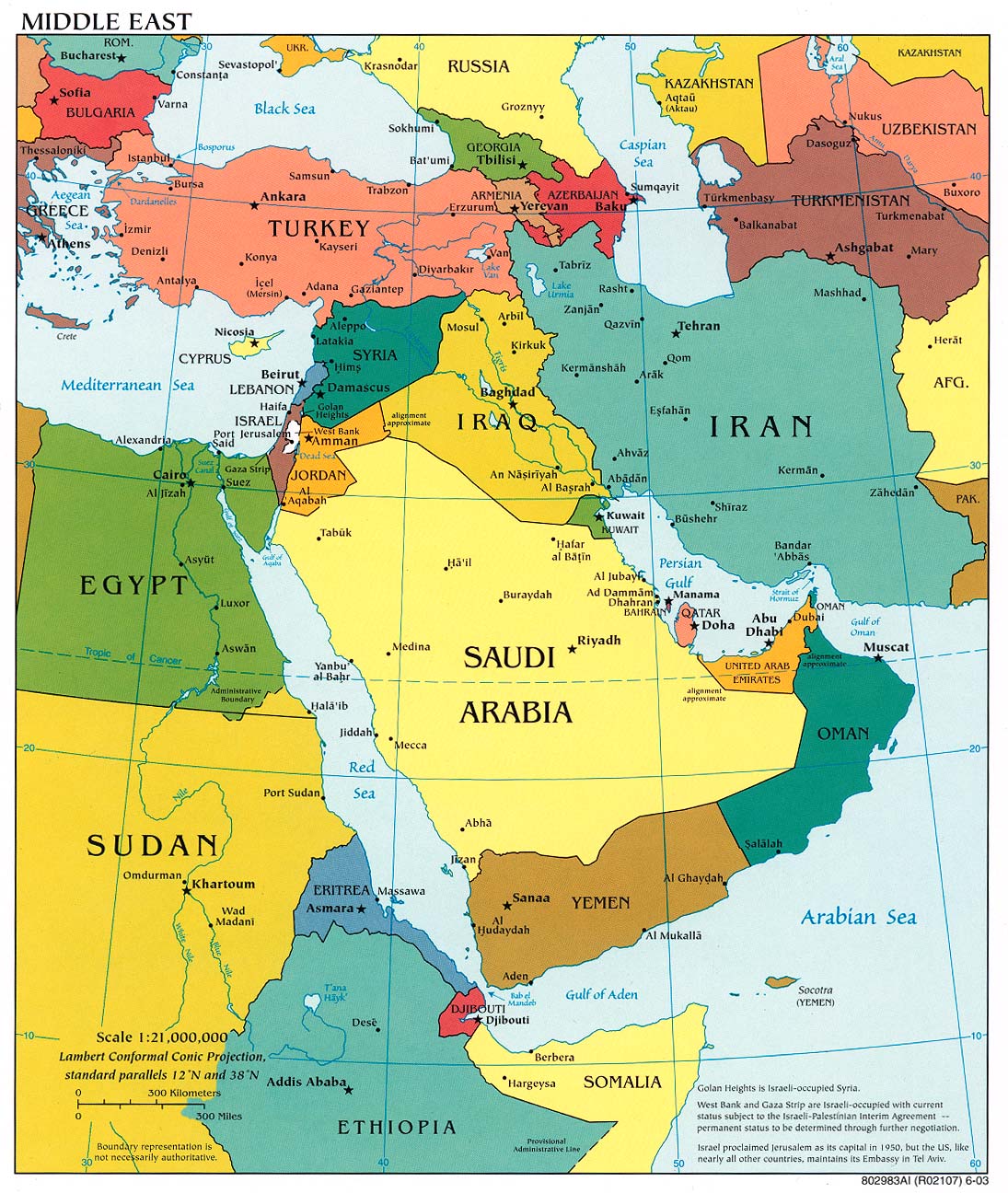
The PRC was formed in 2000 at the beginning of the second Palestinian intifada (uprising), and is based mainly out of Gaza. It's leadership consists of former Fatah members who are against peace with Israel, as well as members of Hamas and Islamic Jihad. It is also suspected of having ties with the Lebanese group Hezbollah.

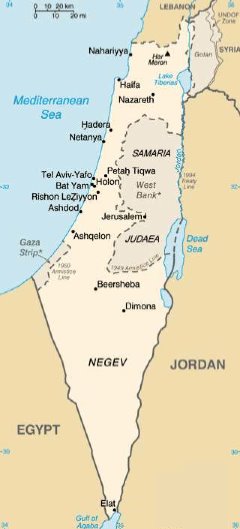
The PRC has killed Israeli soldiers and civilians in the Gaza Strip and has wounded several Israelis by firing rockets into the Jewish State from Gaza. It claimed responsibility for a 2003 roadside bomb that killed several members of a U.S. diplomatic envoy in Gaza. It also boasted of killing Moussa Arafat, cousin of late PA President Yasser Arafat and former head of security, in 2005. In 2006, the PRC (along with Hamas) kidnapped Israeli Defense Forces ("IDF") Cpl. Gilad Shalit, who is still in captivity.

Other "Political Parties" with Armed Wings

To most in the West, a political party having an armed wing seems seems antithetical to democracy. But in the Middle East, there are plenty of examples of groups that have both political branches and a militia.

Palestinian Authority ("PA") President Mahmoud Abbas' Fatah party has armed wings (separate from official PA security forces) associated with it, including Tanzim, Force 17, and the al-Aqsa Martyr's Brigade. Similarly Hamas, the political party that won PA parliamentary elections in 2006, is best known for suicide bombings committed by its armed wing.

Hezbollah also has political and armed divisions. In the 2005 Lebanese parliamentary election, Hezbollah won 14 seats, and for a while had two members in the cabinet.

In Iraq, it seems as if all political parties have their own militaries.

Even Israeli political parties use to have armed wings, though this is no longer the case. More on Israel's transition in a moment.

Can Armed Political Parties fairly Participate in Democratic Processes?

The answer, exemplified by Hamas, seems to be yes. Hamas won the 2006 PA parliamentary election not because it intimidated voters with its militia, but because the ruling Fatah party was seen as corrupt.

On the other hand, having distinct armed wings creates a highly destabilizing atmosphere. Because Fatah refused to disband its militias, Hamas and other groups such as the PRC maintained theirs. And now the PA is in a state of near-civil war.

The Lebanese government has been in political gridlock for almost a year, partly because Hezbollah has refused to disarm. In addition, other terrorist groups are sprouting up, such as the al-Qaeda inspired Fatah al-Islam. And, as I wrote in a previous article, al-Qaeda sees its primary enemies as not only the West but also Shi'ites, whom they describe as infidels. An armed Shi'a Hezbollah only aggravates the situation.

And then there is Iraq. Enough said.


The Altalena: an Israeli Example


Before the rebirth of the Israel in 1948, militarized political parties were common. One political party that had a militia was known as the Revisionist Party (the forerunner of the modern-day Likud Party), and it advocated the creation of a Jewish State in all of British Mandate Palestine.

The military wing of the Revisionist Party, called the Irgun, was led by Menacham Begin. The Irgun initiated attacks against various British installations, such as the bombing of the King David Hotel that killed British Diplomats.

When the State of Israel declared its independence in May 1948, most militias agreed to disband or incorporate themselves into the IDF. The Irgun, however, still wanted to retain some independence.

In June of that year, over 900 Irgun men and tons of military supplies arrived in Israel aboard the Altalena to help fight the War of Independence. Menacham Begin insisted that at least some of the supplies should be earmarked for separate Irgun activity, though then leader of Israel David Ben Gurion concluded that the IDF should have the sole military authority in the Jewish State.

When Begin refused to give up all of the weapons, Ben Gurion ordered the IDF to take the Altalena by force. The IDF opened fire on the ship, killing 16 Irgun fighters and sinking the Altalena. In addition, 200 Irgun men were arrested.

After the incident, all militias were fully disbanded or incorporated into the IDF. Ben Gurion established rule of law, and cemented the concept that the option of force rested solely with the state.

Conclusion

So yes, an armed political party can fairly participate in democratic processes. The PRC may even be able to accomplish this feat. But it is only attempting to do so at the peril of the Palestinian people.

If the Palestinians, the Lebanese, or the Iraqis want peace and stability, they must first get their house in order. They (including ruling parties) must either get militias to disband by agreement, or they must initiate their own Altalena.

The rule of law demands nothing less.

Read More......

Wednesday, July 25, 2007

Turkey Supports Israel

"We see Israel as our number one county that we trust, it plays a very important role in our considerations." These words were spoken not by a U.S. official, but by a representative from a Muslim country: Turkey.

In an interview with an Israeli publication, Turkish Ambassador to Israel Namik Tan spoke glowingly of the relationship between the countries. "We will do our best to help our friends in Israel. We will continue to be a real example of democracy in this troubled region, together with Israel."

His comments come as some in the West, including Israelis, have been concerned that the reelection of a religious-oriented party in the Turkish parliament could move the country away from its Western orientation. The Justice and Development Party (known by its Turkish initials "AKP") promotes the legalization of public displays of religion, such as allowing women to wear head-scarves in Turkish public buildings. That practice is currently outlawed as part of strict secular reforms put in place by modern Turkey's founder, Kemal Ataturk.

But the AKP has also been seen as pro-business, opening up the economy and overseeing annual GDP growth of 7%. Further, the AKP has vigorously enacted reforms that will allow a hoped for accession into the European Union.

Concerning questions that Israelis might not be welcome in Turkey after the recent election, Ambassador Tan responded, "Turkey will continue to be a popular destination for Israeli tourists of course, we are honored to host them in our country."

Concerning Iran, Tan stated that military intervention would not bring desired results, but that Turkey is against Iran getting nuclear weapons, and calls on the country to cooperate with the international community.

Tan also said that his country will continue attempts at facilitating talks between Israel and Syria. At this point, Syria has stated that it only wants to talk with Israel if the U.S. is involved, while Israel has stated that it only wants to talk to Syria one-on-one. Turkey would be an excellent compromise.

Read More......

Sunday, July 22, 2007

Weekend News Wrapup- 7/22/07

Israel and the Palestinian Territories
PALESTINIAN Authority President Mahmoud Abbas has apparently made good on his pledge to crack down on Hamas in the West Bank. On Sunday his security services arrested 22 rival Hamas operatives in a 24-hour campaign against the terrorist group. This comes as members of terrorist groups associated with Abbas' Fatah party have pledged to end their attacks on Israel and turned in their weapons in return for being removed from Israel's wanted list. The question remains as to how many individuals have made that pledge, and whether Abbas is willing and able to enforce an end to attacks on Israel from his own party.

Syria
IRANIAN President Mahmoud Ahmadinejad met in Damascus this past week with Syrian President Bashar al-Assad and Hezbollah leader Hassan Nasrallah. Assad and Ahmadinejad reportedly struck a deal where Iran would fund for Syria $1 billion worth of advance weapons--including fighter jets, tanks, and missiles--and aid in Syrian nuclear and chemical weapons research. In return, Assad reportedly promised not to seek peace with Israel. Iran has denied the deal.

Turkey
EXIT Polls in Turkey's parliamentary elections show the religious-oriented Justice and Development Party [which goes by its Turkish initials "AKP"] won in a landslide against strictly secular parties. Preliminary polls give AKP 51.6%, while left-leaning Republican People's Party ["CHP"] won 15.2% and far-right National Action Party ["MHP"] won 13.7%.

The AKP is more accurately compared to the religious right in the U.S. rather than other "Islamist parties" such as Hamas in the Palestinian territories or Hezbollah in Lebanon. It is considered pro-business, and has overseen annual GDP growth of 7%. It also has worked to conform Turkish laws to fit European Union standards. But it wishes to permit more public expressions of religion in Turkey, such as allowing women to wear head-coverings in public universities or allowing politicians to publicly proclaim their faith. Kemal Ataturk, the founder of modern Turkey, imposed a strict separation of Mosque and State.

In recent months there has been tension between the current AKP government and the military, which considers itself the guardian of Turkish secularism. The military has initiated four coups since the 1960's; the latest occurred in 1997 when Prime Minister Necmettin Erbakan was pressured to step down due to his militant Islamist views. The AKP has much milder views than Erbakan, but the military has accused the party of undermining Turkey's secular character.

In Turkish elections, voters select parties rather than candidates. The party with the most votes wins the most seats in the 550 member parliament. A party must receive at least 10% of the vote to gain seats. If a party takes more than 50% of the seats, they form the government; if no party receives an absolute majority of the seats, several parties may form a coalition government.

Read More......